Kai Wagner · 4 September 2026
Reconstructing Revenue Models After Technical Platform Updates in Subscription Services
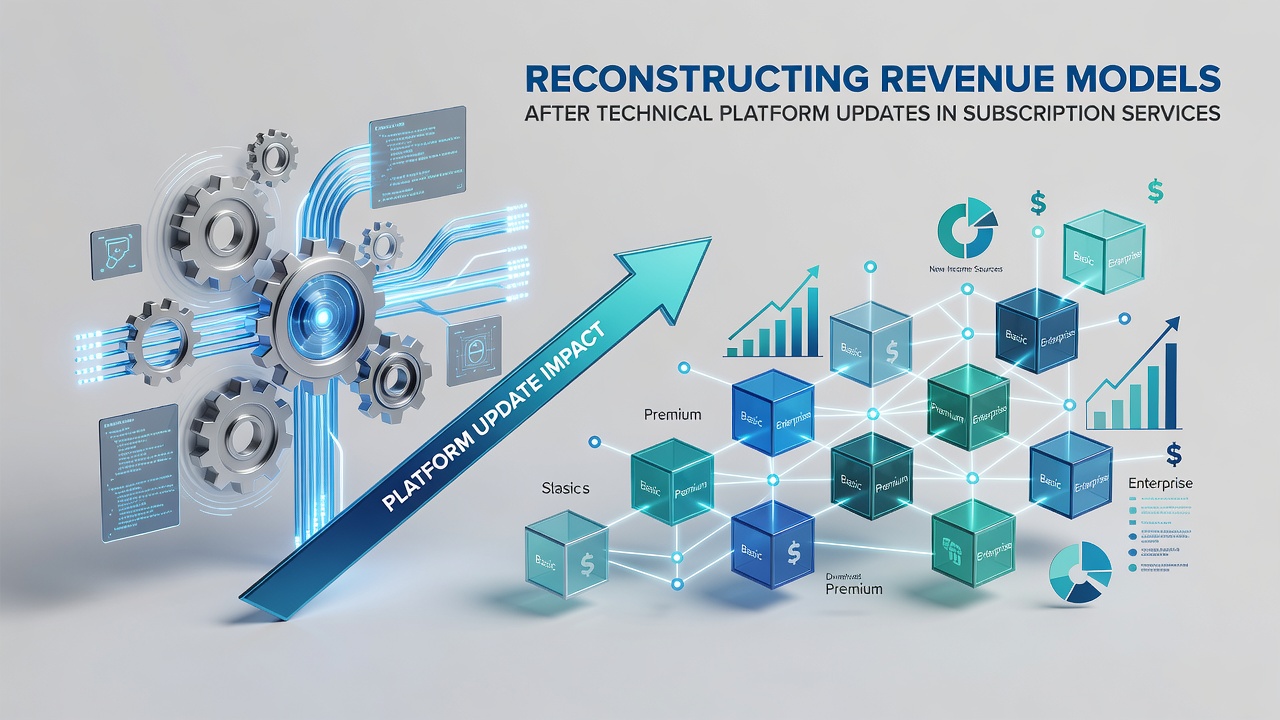
Subscription services face frequent technical platform updates that alter data flows, user interfaces, and integration capabilities, which in turn require adjustments to how revenue gets collected and projected. Companies track these changes through internal metrics while observers note that updates often coincide with shifts in billing cycles, feature access, and customer segmentation. Research from various industry reports shows that services in sectors like software-as-a-service and digital media routinely rebuild pricing tiers following major infrastructure migrations, and data from 2025 indicates that over 60 percent of mid-sized providers implemented at least one such reconstruction within a single fiscal year.
Platform Updates and Their Direct Effects on Billing Systems
Technical updates range from API deprecations to full cloud migrations, and each type carries implications for how recurring charges process without interruption. When a platform introduces new authentication protocols or expanded data storage options, existing subscription contracts must align with fresh usage parameters. Those who've studied these transitions find that services often experience temporary discrepancies in revenue recognition until billing engines receive patches or complete overhauls. In September 2026, several providers plan synchronized updates tied to evolving data protection standards, which analysts expect will accelerate the need for revenue model revisions across European and North American markets.
Observers note that legacy billing logic frequently breaks when platforms add real-time analytics dashboards or third-party marketplace connections. Revenue teams respond by mapping old subscription levels onto new feature bundles, a process that demands cross-department coordination between engineering and finance groups. Studies conducted by academic institutions in Canada reveal that services completing these mappings within 90 days post-update retain higher customer retention rates compared with those requiring longer adjustment periods.
Revenue Reconstruction Approaches Observed Across the Sector
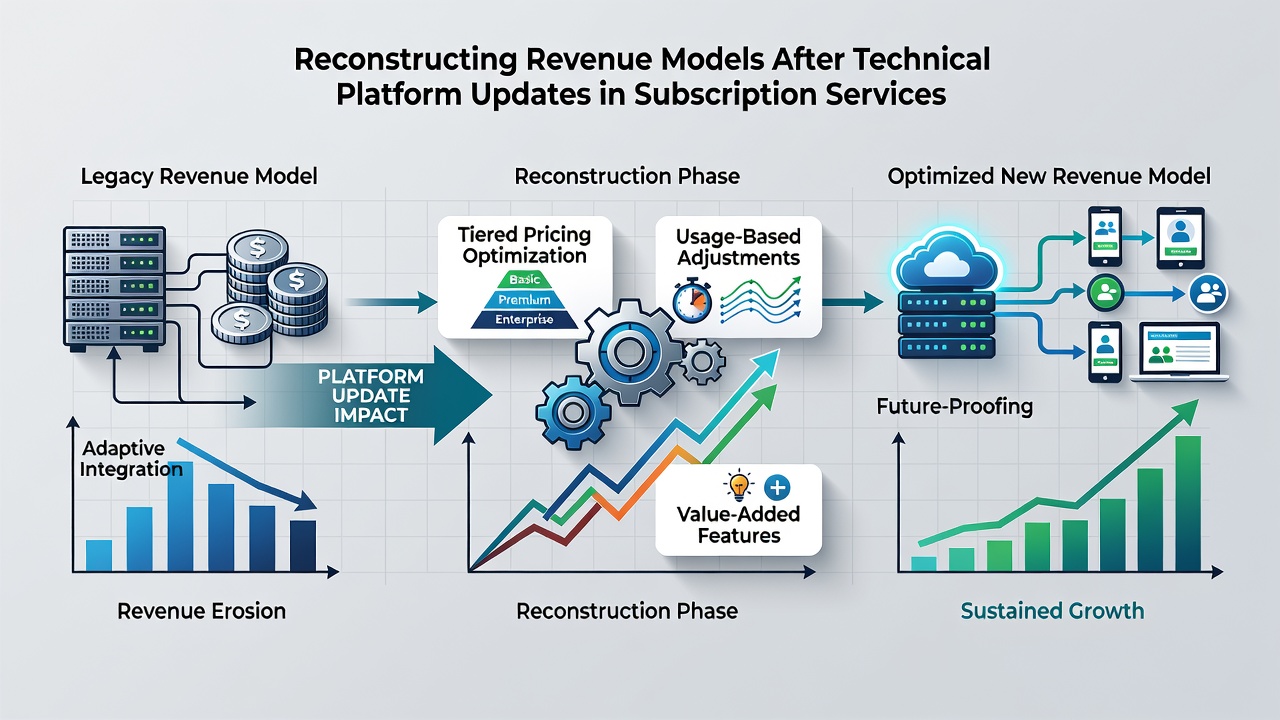
Reconstruction typically begins with an audit of current revenue streams against the capabilities of the updated platform. Services examine whether fixed monthly fees still capture value after new usage-tracking tools become available, and many pivot toward hybrid models that combine base subscriptions with consumption-based add-ons. According to findings published by the Australian Competition and Consumer Commission, providers adopting such hybrids in 2025 reported steadier cash flow during transition windows because charges scaled with actual feature engagement rather than static tiers.
Another common step involves segmenting customers by engagement patterns that the updated platform now measures more precisely. Teams create new cohorts based on API call volumes or storage consumption, then test pricing elasticity within each group. What's interesting here is how these segments often reveal under-monetized user behaviors that older systems could not isolate. Services then introduce graduated pricing that rewards higher engagement while protecting entry-level access, a tactic documented in multiple case studies from university research centers.
Implementation Timelines and Cross-Functional Coordination
Successful reconstructions follow structured timelines that begin weeks before the platform update goes live. Finance teams simulate revenue under proposed models using sandbox environments, while product managers validate that new features align with the revised value propositions. External partners such as payment processors receive updated integration specifications early, which reduces the risk of transaction failures during the switchover. Data from regulatory filings in the United States shows that services disclosing these preparations to investors experience fewer stock volatility spikes around announcement dates.
Coordination extends to customer communication because abrupt changes in billing structure can trigger churn if not explained clearly. Services prepare phased rollout announcements that detail how existing subscribers migrate to equivalent or improved plans. Those who've examined communication strategies find that transparent timelines and grandfathering options for legacy pricing reduce support ticket volume during the transition months.
Trends Leading Into September 2026 and Beyond
Leading into September 2026, platform providers continue to embed artificial intelligence modules that track granular usage data, which subscription services then leverage for dynamic pricing experiments. Industry organizations tracking digital services report that usage-based components now appear in roughly 45 percent of new subscription agreements, up from 28 percent two years earlier. This shift coincides with regulatory developments in multiple regions that emphasize clearer disclosure of variable charges, prompting services to embed compliance checks directly into their revenue engines.
Academic papers examining post-update performance highlight that services maintaining parallel legacy and new revenue models for at least one quarter achieve smoother financial reporting. The approach allows gradual migration of customers while preserving historical benchmarks for forecasting accuracy. Observers note that continued investment in modular billing architecture positions services to absorb future platform changes with reduced reconstruction effort.
Conclusion
Reconstructing revenue models after technical platform updates requires systematic audits, customer segmentation, and phased implementation that align billing logic with new technical capabilities. Services that coordinate across engineering, finance, and support functions demonstrate more consistent revenue continuity. As September 2026 approaches, the integration of advanced usage analytics into platforms will likely accelerate the adoption of hybrid and dynamic pricing structures across subscription services worldwide.