Mara Coleman · 13 November 2026
Managing Data Synchronization Challenges in Multi-Tenant Environments During Provider Switches for Recurring Billing Applications
Multi-tenant environments in recurring billing applications require careful coordination of data across isolated customer instances while maintaining consistent transaction records, and provider switches introduce additional layers of complexity that affect synchronization processes. Organizations handling subscription services often encounter discrepancies in billing cycles, payment histories, and user entitlements when migrating between cloud or SaaS platforms, because each tenant maintains separate schemas yet shares underlying infrastructure components.
Core Synchronization Requirements in Multi-Tenant Billing Systems
Recurring billing applications process periodic charges, proration adjustments, and renewal notifications across thousands of tenants simultaneously, which means data synchronization must preserve temporal accuracy for every account while preventing cross-tenant leakage. Experts note that tenant isolation relies on row-level security and namespace partitioning, yet during a provider switch these mechanisms face temporary disruption as data streams reroute through new APIs and storage layers. Research from cloud infrastructure studies indicates that latency spikes and partial writes become common when legacy billing engines hand off records to newer systems that use different timestamp formats or currency normalization rules.
Observers have documented cases where subscription status flags failed to update uniformly after a migration, resulting in duplicate invoices or missed grace periods for certain tenants. Data shows these issues arise because billing logic depends on synchronized state machines that track trial endings, upgrade paths, and dunning sequences, and any desynchronization in one tenant can cascade if shared reference tables for tax rates or discount codes are not migrated atomically.
Provider Switch Dynamics and Their Impact on Data Flows
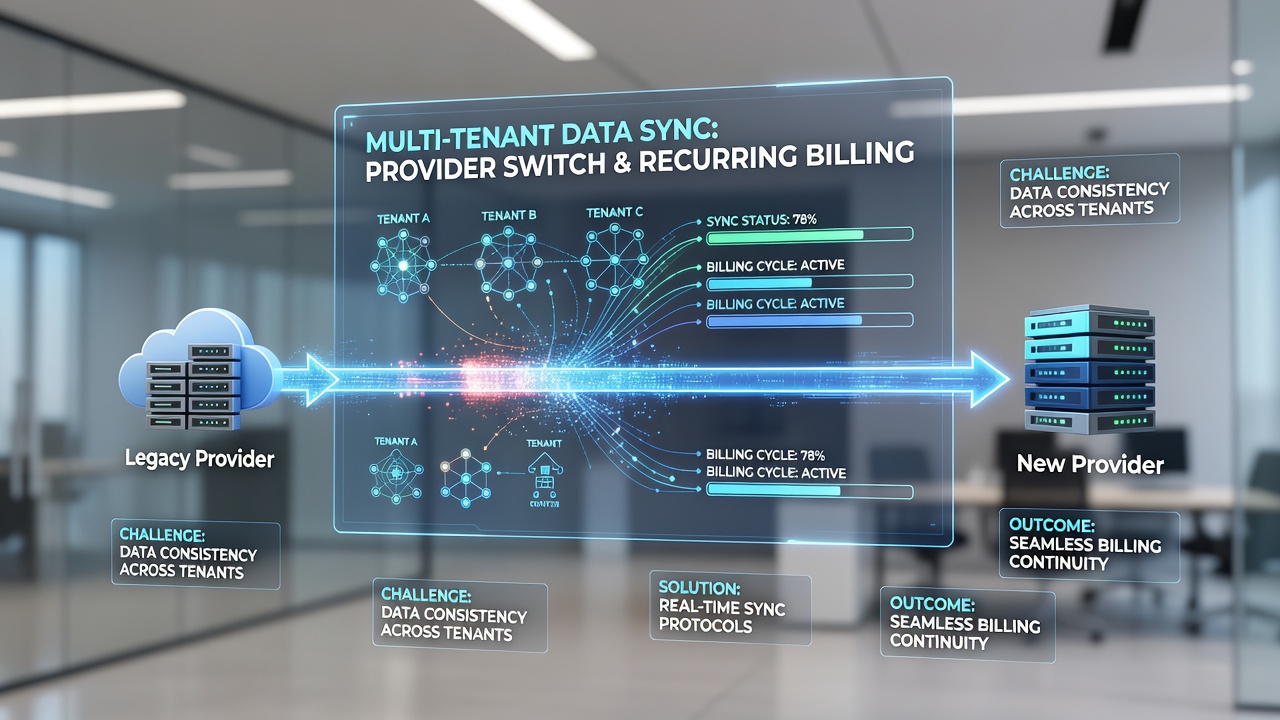
When organizations transition recurring billing workloads from one provider to another, they must replicate live subscription data, historical invoices, and customer metadata without interrupting ongoing charge attempts. November 2026 marks a notable period for several enterprises planning such moves, since regulatory updates on cross-border data transfers in multiple jurisdictions take effect then and influence how synchronization tools handle encryption keys and audit logs. Industry reports highlight that cutover windows typically span several days, during which bidirectional sync between old and new environments becomes essential to catch any post-migration transactions that originate from the legacy system.
Those managing these projects find that webhook endpoints for payment processor callbacks must be reconfigured carefully, because missed events during the switch can leave recurring billing records in inconsistent states across tenants. Figures from migration analyses reveal that reconciliation scripts often run hourly to compare aggregate totals for active subscriptions and outstanding balances, allowing teams to detect drift before it affects customer-facing statements.
Technical Approaches to Maintaining Consistency
Engineers address synchronization challenges through change data capture pipelines that stream modifications from the source provider into the target environment in near real time, while conflict resolution rules determine which version of a billing record prevails when concurrent updates occur. One documented approach involves embedding tenant identifiers in every message payload so that downstream processors can route events correctly without violating isolation guarantees. Academic studies on distributed databases demonstrate that eventual consistency models work for non-critical fields such as usage counters, whereas strongly consistent locks remain necessary for payment authorization states to avoid double-charging.
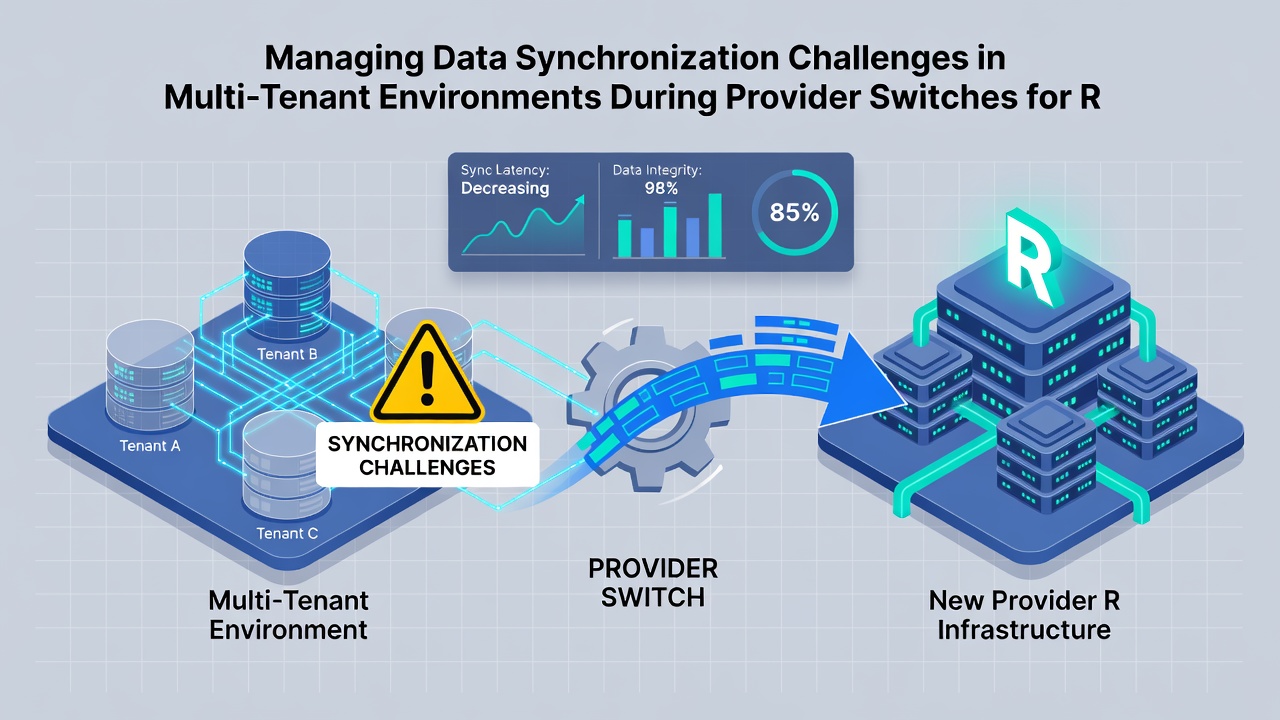
Additional safeguards include maintaining a dual-write buffer for a limited period after the switch, allowing the new provider to receive updates while the old system continues to serve read traffic until verification completes. Data residency requirements in different regions further complicate these buffers, since certain jurisdictions mandate that customer billing information remain within specific geographic boundaries throughout the transition.
Verification and Monitoring Practices
Teams implement automated validation suites that sample tenant records before, during, and after the cutover to confirm that subscription quantities, next billing dates, and payment method tokens align between environments. According to guidelines published by the National Institute of Standards and Technology on cloud data portability, organizations benefit from establishing measurable consistency thresholds that trigger alerts when divergence exceeds predefined tolerances. Continuous monitoring dashboards track metrics such as replication lag, failed webhook deliveries, and unmatched invoice totals, providing visibility into synchronization health across the entire tenant population.
External audits often examine whether cryptographic material for stored payment details transferred securely and whether access logs remained intact during the provider change. A study conducted by researchers at the University of Waterloo examined similar migrations in enterprise SaaS platforms and found that phased tenant rollouts reduced the blast radius of synchronization errors compared with big-bang approaches.
Conclusion
Effective management of data synchronization in multi-tenant recurring billing applications during provider switches depends on precise coordination of change streams, atomic record handling, and rigorous post-migration verification. Organizations that adopt structured reconciliation processes and maintain dual-write mechanisms for defined intervals achieve higher consistency rates across tenant datasets. As regulatory timelines such as those approaching in November 2026 influence data handling practices, documented patterns from prior migrations continue to inform how teams structure their synchronization strategies for future transitions.